
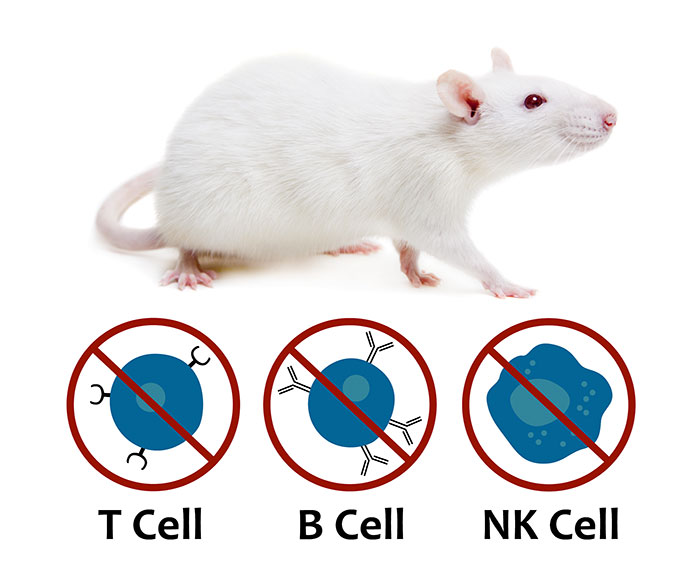
The SRG rat is a SCID model created through knockout mutations in the Rag2 and Il2rgamma genes, resulting in a loss of mature B, T, and NK cells. This immunodeficient phenotype makes the SRG rat ideal for the engraftment of human tissue.
Leveraging the Sprague Dawley background and the larger organism size, SRG users have found these rats uniquely optimal for combining efficacy, pharmacokinetic (PK), biomarker, and toxicology-related endpoints.
Access SRG rats or research services directly from our trusted partner, Charles River Laboratories, or conduct your own studies in-house or with a CRO of your choice.
What’s Unique About The SRG Rat Model?
While some immunodeficient rodent strains, such as the Nude rat, are partially immunodeficient (missing T-cells), this enhanced immunodeficient rat model has a severely impaired immune system lacking B-cells, T-cells, and NK-cells.
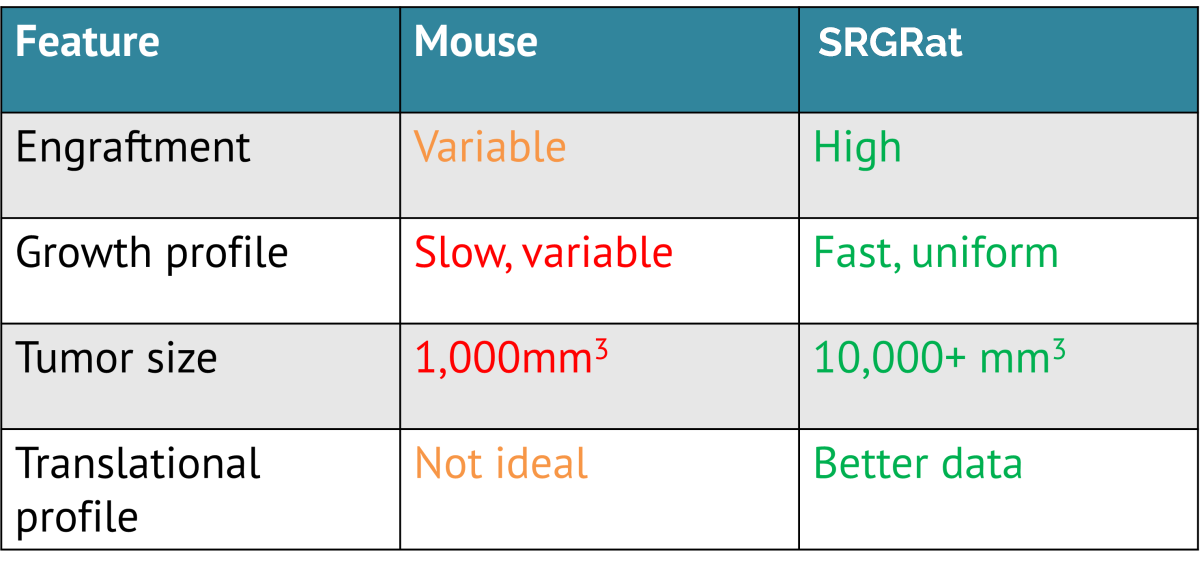
The SRG Rat model demonstrates enhanced utility, such as high tumor take rates and favorable growth kinetics for both cancer cell-line xenografts and PDX models. The model overcomes the limitations of smaller mouse models, enabling larger tumor growth, easier surgeries, and more tissues and serum for analyses, including repeat sampling.
Exclusive SRG distribution partnership
with Charles River

Charles River Laboratories (CRL) is Hera’s exclusive global distributor for the SRG rat. All orders are processed and fulfilled by CRL, which also offers preclinical services using the SRG platform. Learn more about SRG rat from Charles River.
Validated Using Difficult Xenograft and Patient Derived Xenograft (PDX) Models
The SRG rat supports a tumor microenvironment that more closely mimics human biology than mouse models. Data indicate that SRG rats better preserve the architectural and stromal components of patient-derived tumors, enhancing the translational relevance of xenograft and PDX studies. This feature is particularly valuable for evaluating immunomodulatory therapies, where a supportive microenvironment is critical. View supporting data (PDF).
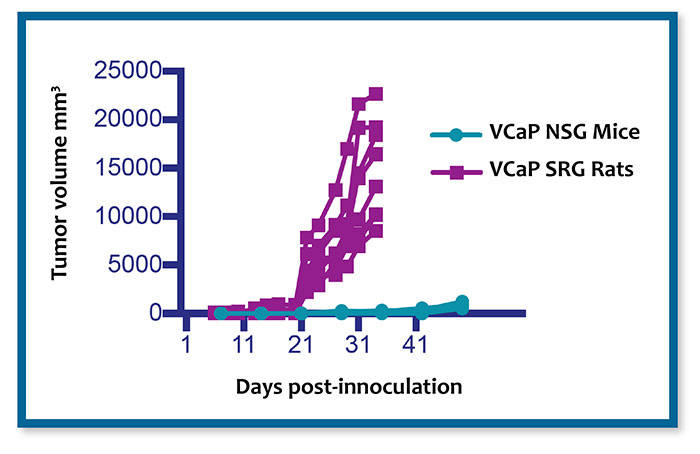
The SRG Rat has been validated using a wide range of xenografts that consistently demonstrate high tumor take rates with traditionally difficult-to-engraft cell lines, such as VCaP prostate cancer, H358 non-small cell lung cancer (NSCLC), and prostate, NSCLC, and ovarian PDX models.
Additionally, humane endpoints allow for subcutaneously implanted xenograft and PDX models to reach 10X tumor volumes, up to >20,000 mm³, compared to mouse xenografts, allowing for serial tumor sampling or faster PDX establishment.
How Is The SRG Rat Better Than SCID Mice?
The SRG rat enables improved imaging capabilities over mouse models, including PET/CT and bioluminescence, due to its larger size and stable tumor growth. Studies have shown that tumors in SRG rats are more readily detected at earlier timepoints and support serial imaging workflows for preclinical therapeutic evaluation. View imaging study (PDF).
Through the use of the SRG Rat, researchers can collect more consistent, higher-quality data that provides advantages for predicting success in the clinic.
Xenografts in the larger SRG Rat models can display vastly improved engraftment efficiencies, tumor size, growth, and tumor morphology across a number of human cancer cell lines and patient-derived tissues that are either not permissive or extremely inefficient in mice.
Cancer Researchers Find Success With SRG Rat Models
A team of researchers led by Dr. Ramesh Narayanan at the University of Tennessee partnered with Hera BioLabs to evaluate new therapeutics for castration-resistant prostate cancer (CRPC), targeting androgen receptors (ARs).
Given the need for prostate cancer xenografts which model high AR-expression amplification phenotype found in many CRPC patients, the SRG rat has high tumor take rates of prostate cancer xenograft cell lines such as LNCaP & VCaP (>90%) which are prohibitively inefficient in mouse. Hera has expanded our capabilities to include validated castration-resistant and enzalutamide-resistant models.
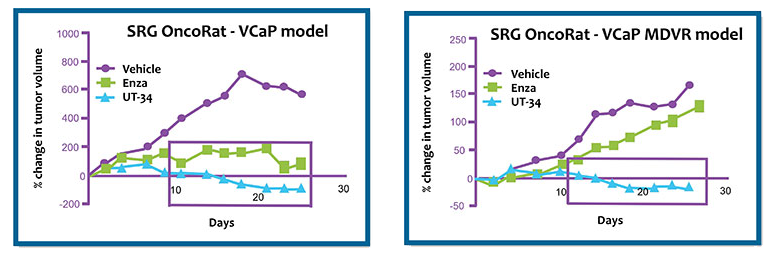

“The tumor uptake rate was to 80-100%, which is a huge advantage because what we could achieve as a statistical significance with 8-12 mice, can be achieved with 5-6 OncoRats.”
Ramesh Narayanan, Ph.D.
Associate Professor of Medicine & Hematology
University of Tennessee Health Science Center
Creating the SRG Rat
The SRG Platform is a Sprague-Dawley rat with a double knockout for the Rag2 and Il2rgamma genes (SD-Rag2tm2hera Il2rgtm1hera). SRG is a severely immunodeficient rat that lacks B-cells, T-cells, and NK-cells and was first introduced to enable and accelerate xenograft efficacy studies.
Background
Cutting-edge gene-editing technologies Cas-CLOVER and super piggyBac® enabled Hera to precisely engineer animal models and cell systems. Due to limitations of mouse models for oncology and the improved translatability of rats, Hera set out to create the ultimate rat model for oncology. The SRG Rat Platform was created through targeted-nuclease mediated gene disruption of the rat Rag2 and Il2rg genes. It contains an 8 bp deletion in the Rag2 gene causing defective V(D)J recombination, preventing T cell and B cell development. SRG also has a 16 bp deletion in the Il2rg gene, which leads to a lack of cytokine signaling, resulting in defective lymphoid development. The combined mutations result in a SCID rat with loss of mature B, T, and NK cells.
Phenotype & Applications
The SRG has a SCID rat phenotype and accepts human tissue as a xenograft model. The SRG Rat has been validated with a wide range of xenograft models, including patient-derived xenografts (PDX), and consistently demonstrates improved tumor take rates and delivers tumor sizes 10x that of mouse models in half the time. For translational research, the rat produces blood and tissue samples ten times larger than mice and is metabolically closer to humans. Since the rat is the preferred model for pharmacokinetics (PK) and toxicology, the SRG is ideally suited for efficacy and PK/toxicology studies in the same animal.
Immunophenotype of the SRG Platform
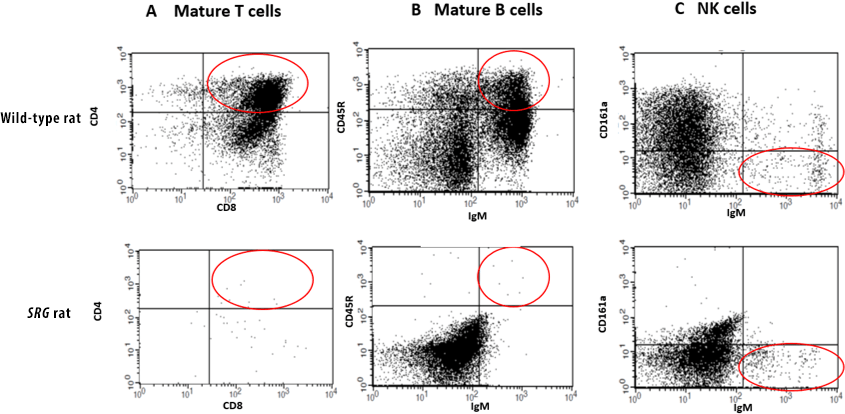
Analysis of immune populations in SRG rats.
- A) CD4+/CD8+ mature T cells are absent.
- B) The spleen contains no mature B cells as demonstrated by lack of CD45R (B220)+/IgM+ cells.
- C) The Il2rg knockout results in a reduced NK cell population in the spleen.
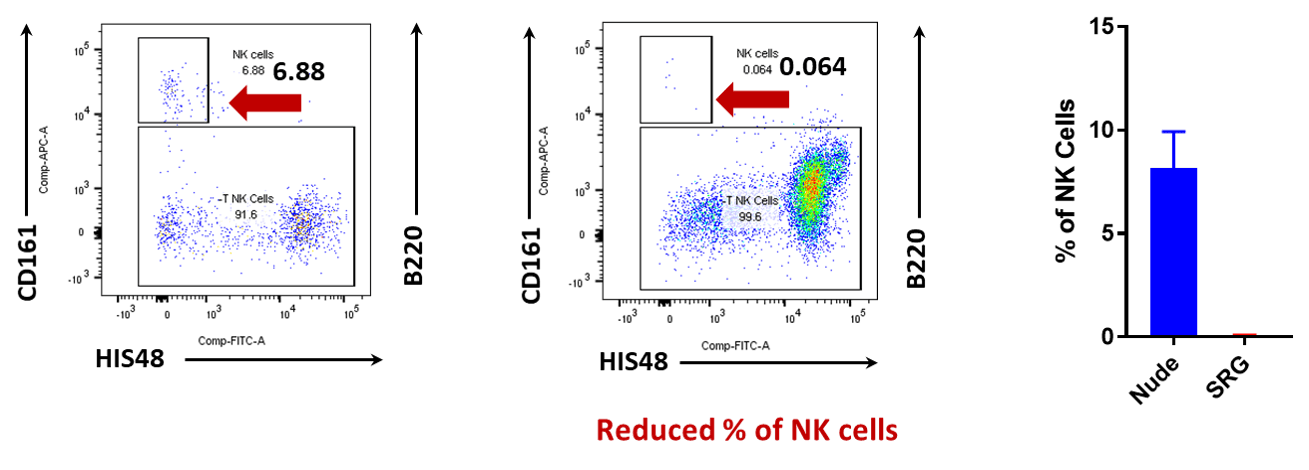
Comparison between Nude rats and the SRG rat show a severally reduced number of natural killer (NK) cells in the circulating blood.